
Earthrise, 12/24/68, Now More than Ever
Dear Reader, I originally published this post, or most of it, two years ago, Christmas Eve 2023. Much has happened in our world since then, making all the more urgent and needed the unifying impact—we may hope— of seeing with our own eyes the beautiful/fragile planet we share and all call home.
The astronauts themselves, and the Apollo program in general, though born out of competition from JFK forward, conveyed a spirit of cooperation and peace. The message the Apollo 8 crew transmitted that Christmas Eve, 1968, after reading the first ten verses of Genesis, ended with a blessing to all:
“Good night, good luck, a Merry Christmas, and God bless all of you—
all of you on the good Earth.”
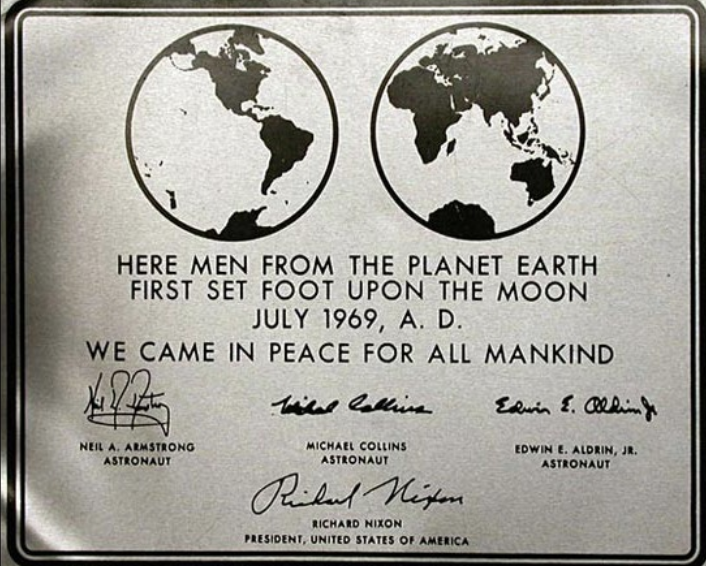
And a few flights later, Apollo 11, landing humans on the moon for the first time in July, 1969, bore a plaque on the lunar landing craft (image above and below, at bottom), stating:
“Here men from the planet Earth
first set foot upon the Moon
July, 1969 A.D.
We came in peace for all mankind.”
I do not look upon these statements with a cynical eye, but with a saddened yet resolute heart that this aspirational spirit of peace and shared humanity must be reclaimed. I believe it will be, and we will do so, because that is our indelible and unquenchable calling.
And so, the original post from 2023:
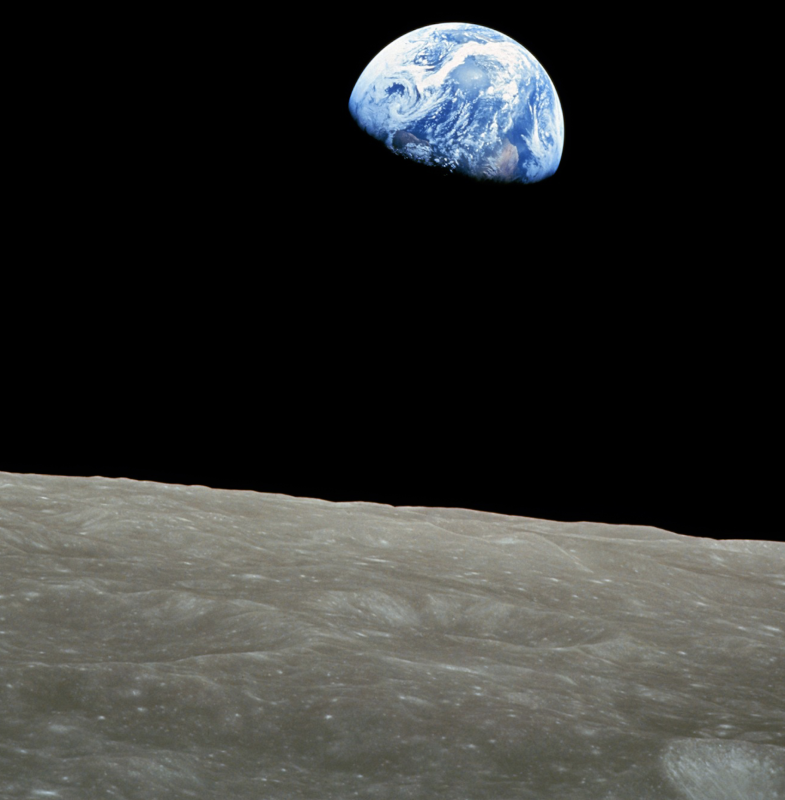
On this day, Christmas eve, fifty five years ago, a most spectacular photograph was taken. Now known as Earthrise, the photograph was taken by Apollo 8 astronaut William Anders, as he and his crewmates Frank Borman and James Lovell orbited the Earth (for a total ten times), paving the way for the Apollo 11 moon landing, just seven months later (July, 1969). These three astronauts were the first humans to reach the moon, and to witness and photograph the far side of the moon and the Earth emerging from behind it.
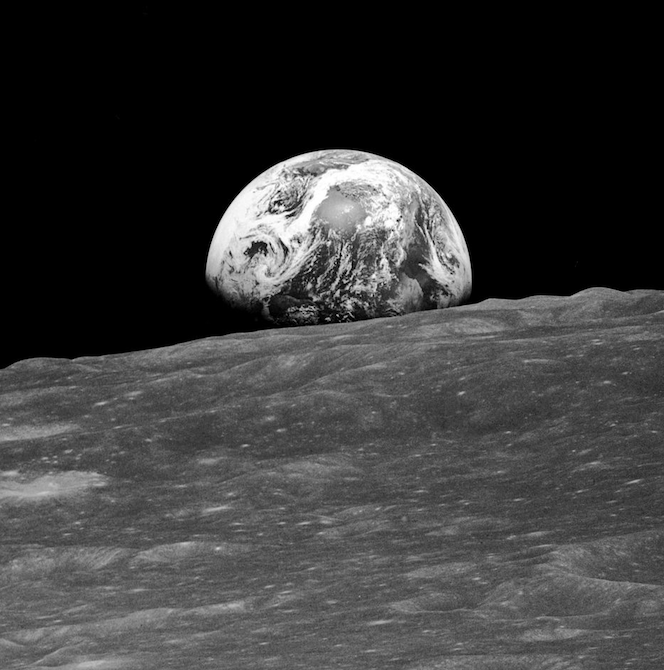
The first photograph of Earth from the perspective of the moon was taken just moments before Earthrise, in black and white. When Lovell saw how glorious was the scene unfolding before him, he asked his crewmates to hand him a roll of color film. I’m glad he did. Both mediums are magnificent.
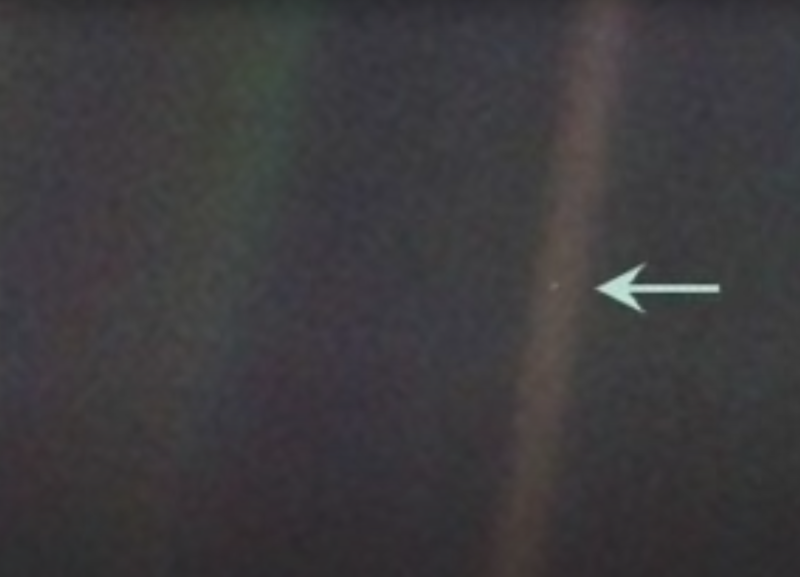
Just nine years after the Apollo 8 mission, the Voyager 1 space probe launched to explore the fullness of our solar system. After fulfilling this mission, the probe was directed to head into deep space. In 1990, nearly 6 billion miles away from Earth, and at the behest of Carl Sagan, the probe turned back toward Earth and took a picture. Now known as the Pale Blue Dot photograph, it provides a complimentary message to that of Earthrise. Here’s some of what Sagan had to say:
“The Earth is the only world known so far to harbor life. There is nowhere else, at least in the near future, to which our species could migrate. Visit, yes. Settle, not yet. Like it or not, for the moment the Earth is where we make our stand. To me, [this distant image] underscores our responsibility to deal more kindly with one another, and to preserve and cherish the pale blue dot, the only home we’ve ever known.”
Apollo 11 Lunar Landing plaque
~

You must be logged in to post a comment.